
The Hidden Layer That Actually Protects Your Home: What’s Under Your Roof Matters
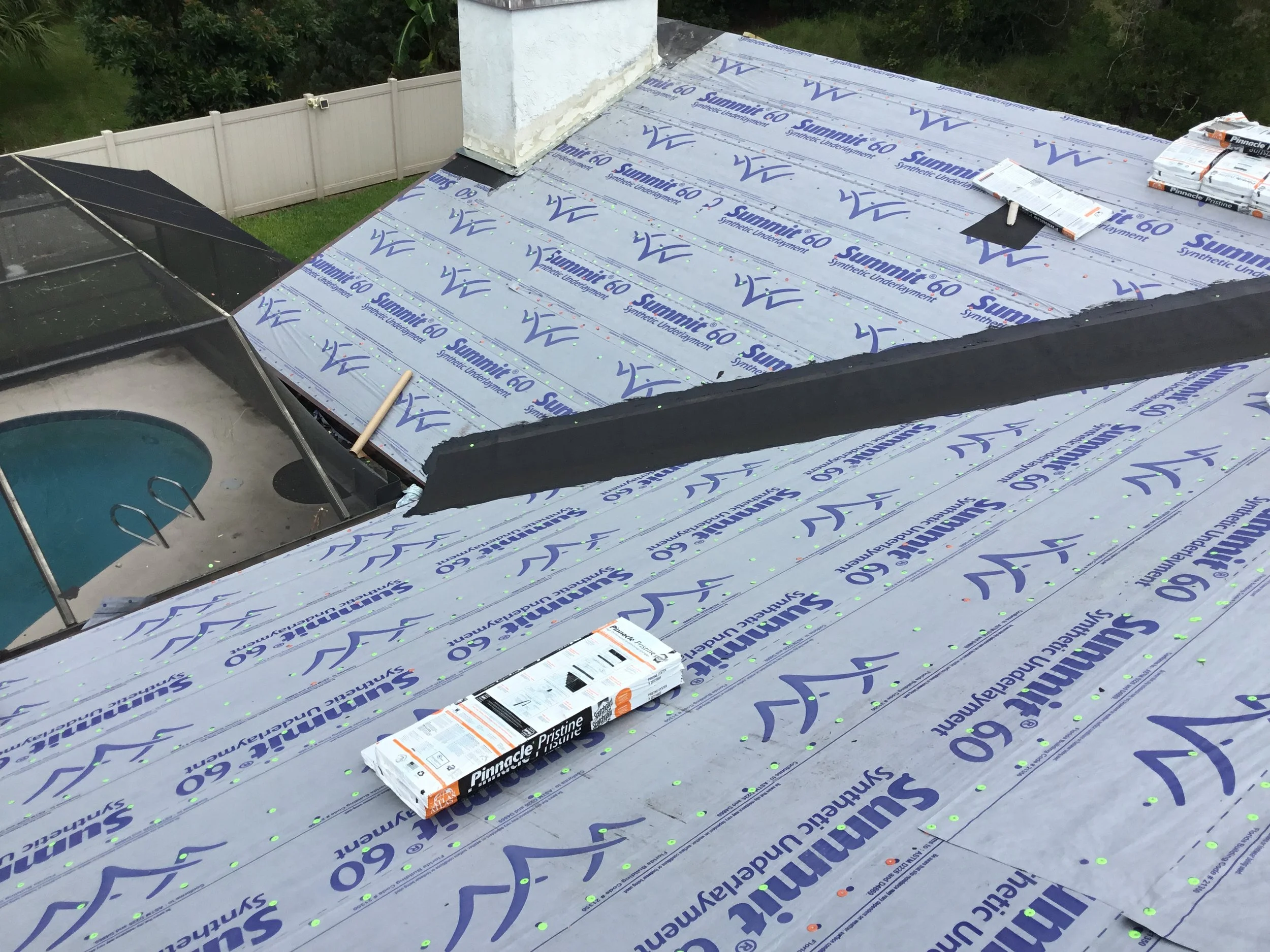
Synthetic underlayment using Peel & Stick(Ice Barrier) on Valleys and important flashing areas.
When most homeowners think about a roof, they picture what they can see from the street — shingles, tiles, or metal panels neatly lined up above their home. It’s natural to focus on that outer layer because it’s what gives a roof its appearance and character.
But in many ways, the most important part of a roof is something you will likely never see.
Beneath the visible surface lies a protective layer that quietly does much of the real work of keeping your home dry, safe, and stable. This layer is often called underlayment — essentially a secondary barrier between your home and the elements.
Understanding what this hidden layer does, why it matters, and how it affects long-term roof performance can completely change the way homeowners think about roofing decisions.
This isn’t about technical details or construction complexity. It’s about understanding how your home is actually protected, and why what you can’t see often matters more than what you can.
Why the Outer Roof Isn’t the Only Defense
A common misconception is that the outer roofing material — shingles, tile, or metal — is the sole protector of a home.
In reality, that outer layer is designed to shed water, not make your home completely waterproof on its own.
Rain, wind-driven water, and moisture can sometimes slip past the outer surface, especially during severe weather. That’s not a failure of the roof — it’s simply how roofing systems are designed to function.
That’s where the hidden layer comes in.
Underlayment acts as a backup defense. If water gets past the outer layer, this secondary barrier is meant to guide it safely away from your home instead of allowing it to soak into wood, insulation, or interior spaces.
Think of it like a raincoat underneath a jacket. The jacket may repel most rain, but the raincoat provides extra protection if water sneaks through.
This layered approach is what makes modern roofs truly reliable over time.
What Underlayment Actually Does
Underlayment serves several important purposes that many homeowners never think about:
1. Protects Against Wind-Driven Rain
During storms, rain doesn’t always fall straight down. High winds can push water sideways, forcing it under shingles or tiles in vulnerable areas.
Underlayment acts as a safety net, catching that water and directing it away before it reaches your home.
2. Shields the Wood Beneath Your Roof
Beneath the outer roof is typically plywood or wooden decking. If that wood gets wet repeatedly, it can weaken, rot, or warp over time.
Underlayment helps keep that wood dry, preserving the structural strength of your roof.
3. Provides Temporary Protection During Construction
If your roof is being replaced and rain arrives before the outer materials are fully installed, underlayment keeps your home protected in the meantime.
In this way, it acts like a temporary roof while the permanent one is being built.
4. Helps Your Roof Last Longer
A well-protected roof structure ages more evenly, experiences fewer hidden problems, and typically performs better over time.
In many cases, homeowners who invest in better underlayment end up needing fewer repairs years later.
Not All Underlayment Is the Same
Just like with visible roofing materials, there are different types and qualities of underlayment.
Older homes often used traditional felt paper, which does provide basic protection but can degrade over time.
Newer homes — or modern roof replacements — often use synthetic or peel & stick underlayment, which is stronger, more resistant to tearing, and better at handling extreme temperatures.
Homeowners don’t need to become experts in these materials. What matters is understanding that quality beneath the surface can have a huge impact on long-term performance.
A roof that looks identical from the outside can perform very differently depending on what’s underneath.
Why This Matters for Homeowners
Most homeowners never think about underlayment — and that’s completely normal.
But understanding its role helps you make more informed decisions when:
Replacing a roof
Repairing storm damage
Working with insurance
Evaluating contractor recommendations
If someone tells you that “the roof looks fine,” that doesn’t always mean everything underneath is perfectly healthy.
Likewise, if a contractor suggests upgrading this hidden layer, it’s not necessarily an upsell — it may be a long-term investment in protecting your home.
The Difference Between Short-Term and Long-Term Thinking
Some roofing decisions are about immediate appearance or cost.
Others are about what your home will look like — and how it will perform — ten or twenty years from now.
Underlayment falls squarely into that second category.
You won’t admire it from the street. You won’t show it off to guests. You won’t see it every day.
But when heavy storms roll through, when insurance companies evaluate your roof, or when small leaks try to creep in — that hidden layer is quietly doing its job.
And that’s when its value becomes very clear.
A Smarter Way to Think About Your Roof
Instead of thinking of your roof as just shingles or tiles, it’s more accurate to think of it as a layered system working together.
Each part has a role:
The outer roof sheds water
The underlayment protects what’s beneath
The structure supports everything above
When all three are cared for, your home is far better protected.
Understanding this doesn’t require technical knowledge — just a shift in perspective.
Peace of Mind You Can’t See
At the end of the day, the best protection is often invisible.
A roof built with care, quality materials, and thoughtful layers doesn’t demand attention. It simply does its job quietly, year after year.
For homeowners, knowing that there is more protecting your home than just what meets the eye can bring real peace of mind.
You may never see your underlayment.
But your home certainly feels its benefits.
If you’re curious about what’s beneath your roof—or want clarity on how your home is truly protected—a calm, professional conversation can help you understand what matters most and what’s already working in your favor.